By Parizad Nizam
Leading the Nation, Missing in Parliament: The Paradox of Women in Bangladeshi Politics
Bangladesh has only elected its second male prime minister this year, following 36 years of uninterrupted rule by female prime ministers[1]. Ranking 24th on the World Economic Forum’s Global Gender Gap Index, Bangladesh also fares much higher than developed countries such as Portugal, France, the US, and Japan[2]. Yet, during Bangladesh’s 13th general elections this year, only 4.24% of the running candidates were women, with only 7 being elected to parliament[3].
In a country ranked this high for gender parity, why is it that there is such little female representation in parliament? This article aims to examine this disparity by firstly delving into the status of women in Bangladeshi society, then exploring the hurdles faced by women when running for parliament, and finally focusing on the different factors at play in the 2026 elections specifically.
The Status of Women in Bangladeshi Society: Progress within Patriarchy
Bangladeshi society is characterised by a patrilineal and patrilocal structure, in which descent is traced through the male line and women relocate to their husband’s household after marriage. This reflects a form of “classic patriarchy”, where men retain control over women’s labour, mobility, and sexuality, and where social norms reinforce female dependency and male guardianship. Within this system, women have traditionally been confined to the domestic sphere: responsible for unpaid care work, childrearing, and maintaining extended family households[4].
Despite these structural constraints, Bangladesh has made remarkable progress on gender equality indicators. According to the World Economic Forum, Bangladesh ranks amongst the top performers in the world, achieving strong parity in health and education. Similarly, UN Women[5] highlights that over half of adult women have attained at least secondary education, and female labour force participation has steadily increased. These gains reflect decades of state policy, NGO intervention, and women’s own participation in education and the workforce.
However, this progress remains uneven. While women have entered the labour market and public life in greater numbers, they remain concentrated in informal or low-paid sectors such as domestic work, or in the ready-made garments sector, and continue to bear a disproportionate burden of unpaid care work. Moreover, legal equality through the Constitutional guarantee of equal participation and rights to women in the public sphere coexists with inequality in the private sphere, where family laws governing marriage, divorce, and inheritance often disadvantage women. High levels of gender-based violence further underline the persistence of patriarchal norms.
Similarly, another contradiction is particularly visible in how Bangladesh’s “political empowerment” is measured. International indices, including those by the World Economic Forum, rank Bangladesh highly in this category, largely due to the country’s long history of female leadership at the highest executive level. As noted by UN Women, Bangladesh has had a woman head of government for the majority of the past five decades. Yet this metric obscures a crucial reality: women’s broader political participation remains limited, particularly in parliament and ministerial positions.
In other words, the visibility of women at the very top of political power does not necessarily translate into substantive or widespread inclusion within political institutions. As this article will explore, structural barriers, party dynamics, and socio-cultural norms continue to restrict women’s access to political office, revealing a significant gap between symbolic representation and meaningful participation.
Why So Few Women Run: Barriers to Power
Despite constitutional guarantees of equality, the introduction of gender quotas, and Bangladesh being acclaimed to be the only country to have a woman as the head of state for the longest duration, women in Bangladesh remain significantly underrepresented among electoral candidates. This disparity is not simply a matter of individual choice, but the result of interlocking structural barriers embedded within both society and political institutions, which can be understood through a sort of supply-demand model, wherein the supply side explains factors that contribute to female political leaders being negatively motivated to not take part in nomination races, while the demand side explains various actors that disfavour the nomination of women[6].
On the supply side, deeply rooted patriarchal norms are the foundational cause discouraging women from entering politics in the first place. Politics in Bangladesh remains heavily masculinised, with leadership associated with male authority, public visibility, and control over resources. As interviewees in a study by Khan and Ara (2023) noted, women are often perceived as inherently less capable political actors, and in some cases are treated as symbolic figures rather than independent decision-makers. These attitudes are reinforced by broader social structures that limit women’s access to property, income, and networks, resources that are essential for sustaining a political career, with dynastic politics also coming into play.
This ties into the particularly significant economic barriers. Electoral politics in Bangladesh is highly monetised, with candidates expected to finance costly campaigns, informal payments, and extensive local outreach. Women, who are less likely to have independent financial resources or access to elite networks, are therefore at another structural disadvantage.
On the demand side, political parties act as critical gatekeepers. In Bangladesh’s party-centred system, securing a nomination is virtually impossible without party backing. However, party structures remain male-dominated and frequently prioritise candidates with strong financial resources, political connections, or dynastic backgrounds. As a result, women without established political family ties are often excluded from nomination processes.
Paradoxically, gender quotas, intended to increase representation, can also reinforce exclusion. While Bangladesh reserves seats for women in parliament, these positions are indirectly allocated by political parties and lack defined constituencies. This limits the political influence and visibility of women in reserved seats and can disincentivise parties from nominating women to directly elected positions. As some interviewees noted, women are often “set aside” for reserved seats rather than supported in competitive constituencies, effectively institutionalising a two-tier system of representation.
Taken together, these factors demonstrate that the underrepresentation of women in Bangladeshi parliamentary elections is not due to a lack of qualified candidates, but rather the result of systemic exclusion operating across social, economic, and political spheres.
The 2026 Elections
The 2026 parliamentary elections provide an interesting case study to examine the structural barriers outlined above. While the number of women participating was at a historical high, this number still only made up 4% of the total candidates, similarly echoing a notion of apparent progress, while still masking a deeper pattern of exclusion. The 7 women to be elected to parliament also highlight the limited translation of candidacy into actual political power.
Moreover, a significant proportion of female candidates were not independent political actors. Approximately one-third were linked to political families, entering politics as wives, daughters, or relatives of established male politicians. This reflects the persistence of dynastic politics, reinforcing earlier findings that women’s political access is often mediated through male networks rather than merit or grassroots mobilisation, thus solidifying inescapable patriarchal dynamics. As one election expert noted, very few women in Bangladesh have been able to “build themselves up from university life through fieldwork,” underscoring the structural barriers to independent political careers[7].
The role of political parties further entrenches this exclusion. Several major parties fielded no female candidates at all, while others nominated women in limited numbers or in less competitive constituencies. This demonstrates the continued function of parties as gatekeepers, restricting women’s access to meaningful participation despite formal commitments to gender equality. Legal provisions, such as the requirement for parties to allocate 33% of internal positions to women, have also been widely ignored, revealing a gap between policy and practice[8].
At the same time, the broader political environment has become increasingly hostile to women. Concerns over the resurgence of conservative Islamist politics through the re-entry of the Jamaat-e-Islami party also contributed to growing anxieties about women’s rights and public participation. Some parties have explicitly excluded women from candidacy, while public discourse around women’s roles has become more restrictive. These developments risk not only limiting women’s political representation, but also rolling back broader gains in gender equality[9].
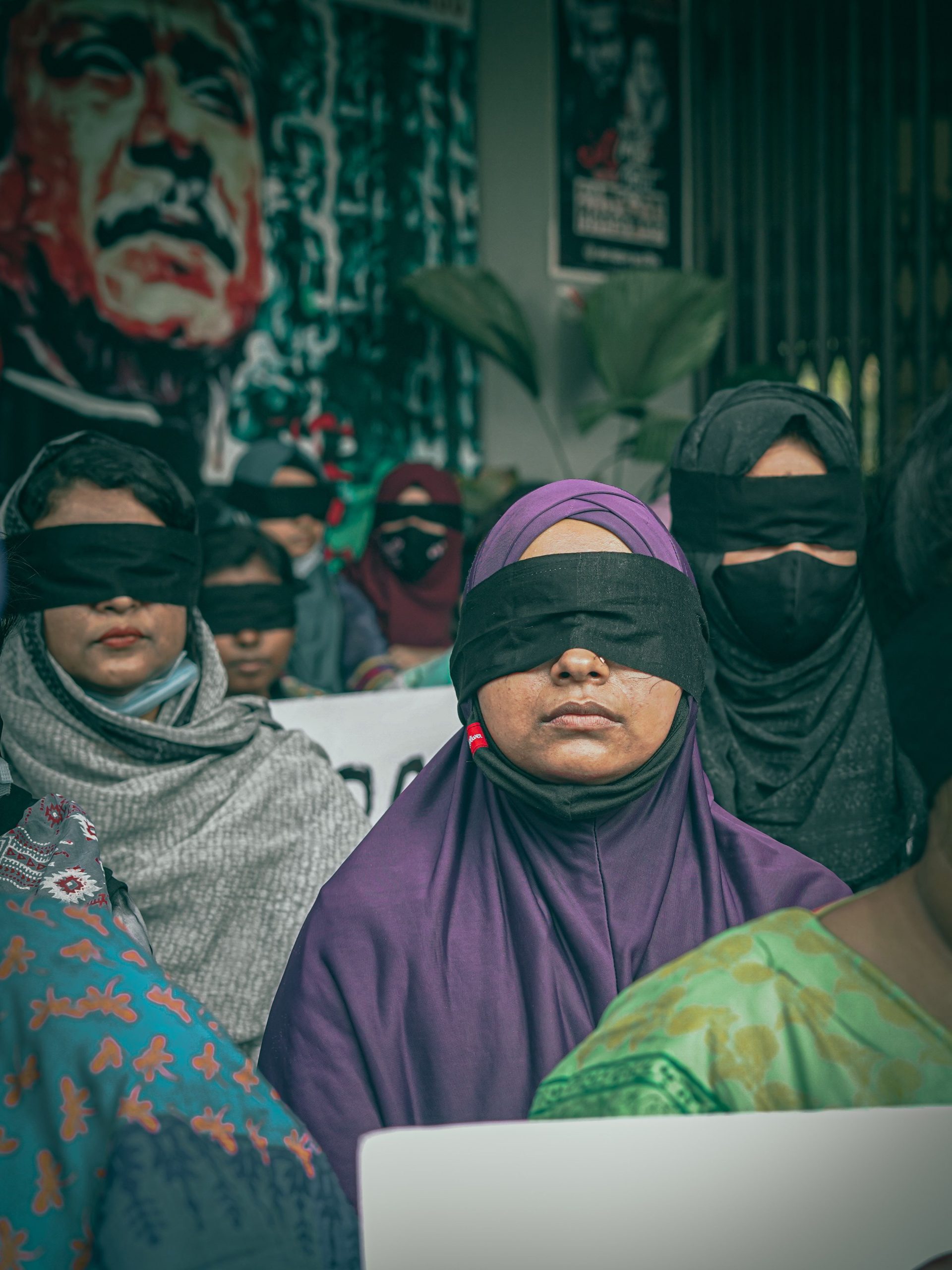
Perhaps most tellingly, women played a central role in political mobilisation, including playing large roles in the 2024 student revolution leading up to the 2026 elections, yet remained largely excluded from formal decision-making spaces. Women were highly visible in protests and advocacy efforts, but remain underrepresented in post-election political settlements and leadership structures.
Taken together, the 2026 elections reinforce a key paradox at the heart of Bangladeshi politics: women are visible in symbolic and supportive roles, yet marginalised in positions of formal power. The persistence of dynastic politics, party control over nominations, and an increasingly restrictive political climate suggests that the barriers identified in earlier sections are not only enduring, but may be intensifying.
Conclusion
Bangladesh thus presents a curious case in the study of gender politics. On paper, the country has made remarkable progress; achieving near parity in education and health, and earning global recognition for women’s political leadership at the highest level. Yet, as this article has demonstrated, these achievements obscure a more complex reality in which structural, cultural, and institutional barriers continue to limit women’s meaningful political participation.
From the patriarchal foundations of Bangladeshi society to the gatekeeping role of political parties and the exclusionary dynamics of electoral politics, women face obstacles at nearly every single stage of political engagement. The 2026 elections, far from signaling progress, instead highlight the persistence of these barriers, evident in the low number of female candidates, the dominance of dynastic pathways, and the marginalisation of women in decision-making spaces.
Addressing this disparity requires more than symbolic commitments to gender equality. Concrete reforms are urgently needed. Political parties must be held accountable for implementing gender quotas in candidate selection, not just internal structures. Additionally, efforts must be made to reduce the financial and security barriers that disproportionately affect women, including stricter regulation of campaign financing and stronger protections against political violence.
Crucially, there must also be a broader societal shift. Without challenging the patriarchal norms that continue to define women’s roles in both public and private spheres, institutional reforms alone will remain insufficient. Empowering women in politics is not simply a matter of representation, it is essential to the functioning of a truly democratic system.
If Bangladesh is to live up to its global reputation as a leader in gender parity, it must move beyond symbolic representation and commit to ensuring that women can participate in politics as equal, independent, and influential actors.
[1] UNB (United News of Bangladesh), “All Eyes on Tarique Rahman as BNP Set to Form Government,” Dhaka Tribune, February 13, 2026, https://www.dhakatribune.com/bangladesh/politics/403264/all-eyes-on-tarique-rahman-as-bnp-set-to-form.
[2] World Economic Forum, “Gender Gap Report 2025,” World Economic Forum, June 11, 2025, https://www.weforum.org/publications/global-gender-gap-report-2025/in-full/.
[3] The Daily Star , “Only 7 Women Make It to Parliament,” The Daily Star, 2026, https://www.thedailystar.net/news/national-election-2026/news/only-7-women-make-it-parliament-4105636.
[4] Sohela Nazneen, “The Women’s Movement in Bangladesh: A Short History and Current Debates,” Collections.fes.de (Friedrich-Ebert-Stiftung. Bangladesh Office , August 2017), https://collections.fes.de/publikationen/ident/fes/13671.
[5] UN Women, “Gender Equality Brief: Bangladesh 2024” (United Nations Entity for Gender Equality and the Empowerment of Women (UN Women), 2024), https://asiapacific.unwomen.org/en/digital-library/publications/2024/04/gender-equality-brief-bangladesh-2024.
[6] Idea originally modelled by Pippa Norris and Joni Lovenduski, Political Recruitment : Gender, Race, and Class in the British Parliament (Cambridge England ; New York: Cambridge University Press, 1995). but Bangladeshi context developed and discussed in Md. Mostafizur Rahman Khan and Fardaus Ara, “Female Candidates and the Bangladesh Parliamentary Elections,” World Affairs 186, no. 2 (March 13, 2023): 004382002311613, https://doi.org/10.1177/00438200231161383.
[7] Mohiuddin Alamgir and Dipan Nandy, “Only 78 Women in Polls, a Third with Family Link,” The Daily Star, January 31, 2026, https://www.thedailystar.net/news/national-election-2026/news/only-78-women-polls-third-family-link-4094506.
[8] The Daily Star Editorial, “Politics Remains Rigged against Women,” The Daily Star, February 15, 2026, https://www.thedailystar.net/opinion/editorial/news/politics-remains-rigged-against-women-4106081.
[9] Hannah Ellis-Petersen and Redwan Ahmed, “‘Women’s Freedoms Are at Stake’: Concern at Rise of Islamist Party before Bangladesh Election,” The Guardian, February 11, 2026, https://www.theguardian.com/world/2026/feb/11/bangladesh-election-islamist-party-women-freedoms.
Bibliography
Alamgir, Mohiuddin , and Dipan Nandy. “Only 78 Women in Polls, a Third with Family Link.” The Daily Star, January 31, 2026. https://www.thedailystar.net/news/national-election-2026/news/only-78-women-polls-third-family-link-4094506.
Ellis-Petersen, Hannah, and Redwan Ahmed. “‘Women’s Freedoms Are at Stake’: Concern at Rise of Islamist Party before Bangladesh Election.” The Guardian, February 11, 2026. https://www.theguardian.com/world/2026/feb/11/bangladesh-election-islamist-party-women-freedoms.
Khan, Md. Mostafizur Rahman, and Fardaus Ara. “Female Candidates and the Bangladesh Parliamentary Elections.” World Affairs 186, no. 2 (March 13, 2023): 004382002311613. https://doi.org/10.1177/00438200231161383.
Nazneen, Sohela. “The Women’s Movement in Bangladesh : A Short History and Current Debates.” Collections.fes.de. Friedrich-Ebert-Stiftung. Bangladesh Office , August 2017. https://collections.fes.de/publikationen/ident/fes/13671.
Norris, Pippa, and Joni Lovenduski. Political Recruitment : Gender, Race, and Class in the British Parliament. Cambridge England ; New York: Cambridge University Press, 1995.
The Daily Star. “Only 7 Women Make It to Parliament.” 2026. https://www.thedailystar.net/news/national-election-2026/news/only-7-women-make-it-parliament-4105636.
The Daily Star Editorial. “Politics Remains Rigged against Women.” The Daily Star, February 15, 2026. https://www.thedailystar.net/opinion/editorial/news/politics-remains-rigged-against-women-4106081.
UN Women. “Gender Equality Brief: Bangladesh 2024.” United Nations Entity for Gender Equality and the Empowerment of Women (UN Women), 2024. https://asiapacific.unwomen.org/en/digital-library/publications/2024/04/gender-equality-brief-bangladesh-2024.
UNB (United News of Bangladesh). “All Eyes on Tarique Rahman as BNP Set to Form Government.” Dhaka Tribune, February 13, 2026. https://www.dhakatribune.com/bangladesh/politics/403264/all-eyes-on-tarique-rahman-as-bnp-set-to-form.
World Economic Forum. “Gender Gap Report 2025.” World Economic Forum, June 11, 2025. https://www.weforum.org/publications/global-gender-gap-report-2025/in-full/.