By Kuma Yung
Oceans Rise, Empires Remain? When ASEAN Neutrality Meets a Flooded Chessboard
Can the strategy built by ASEAN to manage great-power rivalry also govern a warming sea?
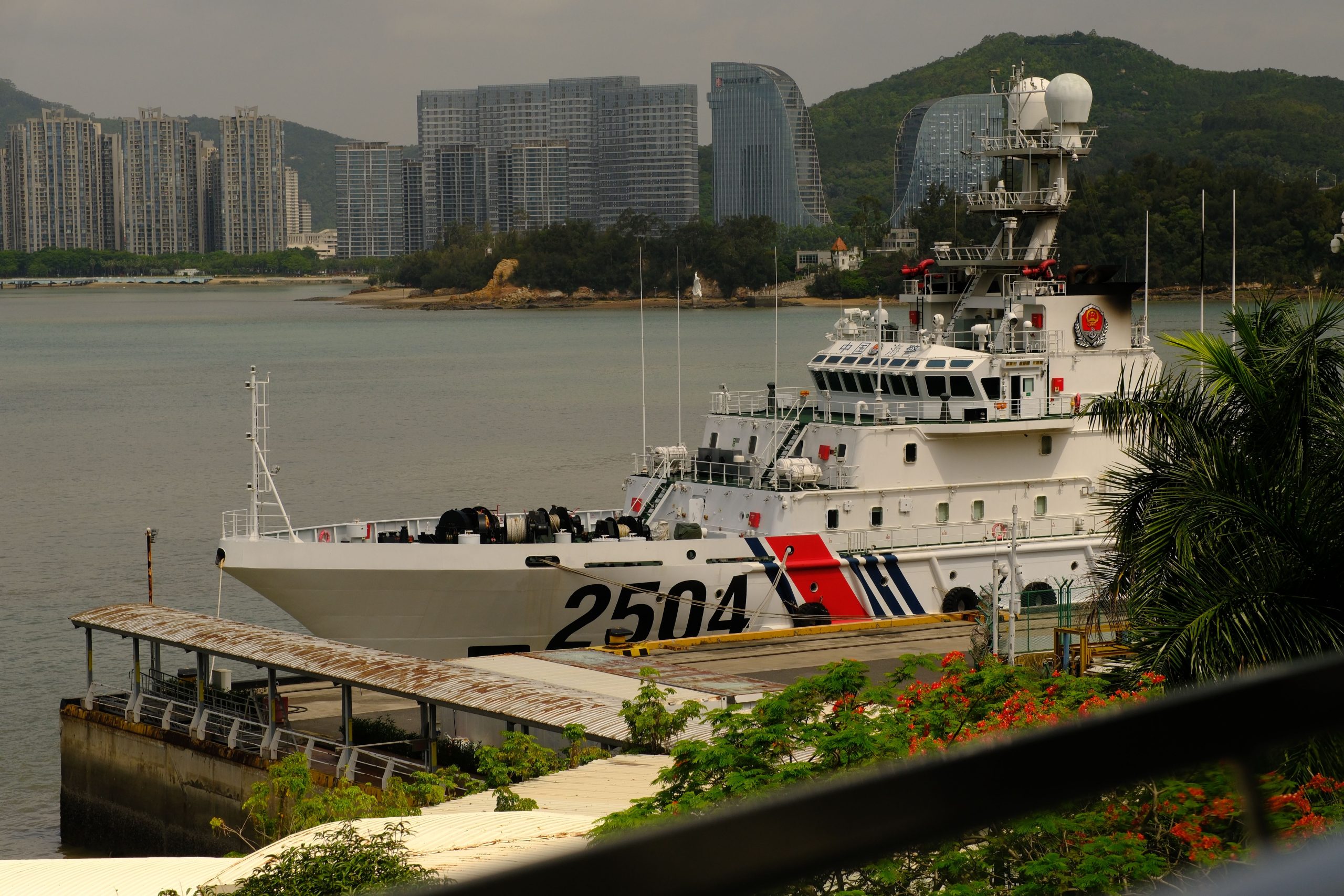
The South China Sea keeps returning to the headlines as a theatre of collisions, coercion, and competing flags. In March 2024, Chinese coastguard vessels used water cannons against Philippine boats near Second Thomas Shoal, damaging a civilian resupply vessel and injuring crew. In June, another confrontation left a Filipino sailor seriously injured. In August, Chinese and Philippine ships collided again near Sabina Shoal. These incidents push public attention towards the familiar language of geopolitics: deterrence, grey-zone pressure, maritime rights, and alliance credibility. They also narrow the region’s political imagination. The same sea that carries coastguards and nationalist claims is also warming, rising, and eroding the coasts, ports, reefs, and fisheries on which Southeast Asia depends.[1]
Gerard Toal offers a sharper way to read that narrowing of vision. In Oceans Rise, Empires Fall, he reworks geopolitics by returning it to the earthly conditions of politics itself: living space, planetary instability, and the material systems that sustain collective life. His warning cuts against the old strategic image of a fixed chessboard on which states manoeuvre for position. States may continue moving pieces across maps, reefs, and sea lanes while simultaneously degrading the conditions that make political order possible. The board itself is flooding. This matters in maritime Asia because the South China Sea is both a strategic arena and a vulnerable environment. A region that treats it mainly as a theatre of rivalry will struggle to place shared ecological exposure at the centre of its understanding of security.[2]
ASEAN neutrality deserves renewed attention because it has never been a frozen doctrine. Michael Leifer observed in the 1970s that ASEAN endorsed a Zone of Peace, Freedom and Neutrality without producing either a precise definition of “neutrality” or a practical programme for implementing it. Ralf Emmers later unpacked ASEAN neutrality as a continuing quest for autonomy and impartiality: preserving regional decision-making space from external domination while avoiding institutionalised bias towards any major power. That ambiguity did not simply reveal weakness. It reflected the region’s diversity and the need for flexibility among states with different security interests. Neutrality in Southeast Asia therefore developed less as a hard rule than as a political habit: autonomy, restraint, and room for manoeuvre amid shifting power relations.[3]
That habit still performs valuable work. Southeast Asian governments do not want their region reduced to an exclusive frontier between Washington and Beijing. Evelyn Goh’s account of regional strategy remains useful here: key states have sought to enmesh major powers in regional institutions and preserve a broader equilibrium through diplomacy rather than collective defence. More recent work by Sarah Teo and Ralf Emmers makes a similar point. Indonesia and Vietnam still rely on ASEAN-centred arrangements to preserve strategic autonomy and avoid being forced to choose sides.[4]
The difficulty is that the South China Sea remains structurally resistant to such management. Emmers identifies territory, natural resources, and power distribution as mutually reinforcing drivers of maritime rivalry. Sovereignty makes compromise politically costly; resources create both incentives for cooperation and new points of competition; and widening power asymmetries allow stronger claimants to shape facts on the water.[5] This is why ASEAN’s push for a South China Sea Code of Conduct deserves more credit than it often receives. It will not settle sovereignty disputes, but it can still operate as a “driver’s licence” for a crowded and dangerous sea: reducing miscalculation, regularising behaviour, and keeping incidents from sliding into wider crisis.[6] ASEAN leaders have continued to call for an early conclusion of the Code, while the Philippines has pressed for unresolved questions of scope, legal status, and consistency with UNCLOS to be addressed.[7] ASEAN institutions have certainly moved slowly, and Emmers and See Seng Tan’s warning that excessive formalisation can blunt preventive diplomacy still matters. But the record is not empty: consultation, flexibility, and incremental conflict management are themselves tools of order.[8]
Yet this conventional account misses something that Toal helps recover. Geopolitical rivalry does not merely crowd ecological insecurity out of the room. It can physically produce it.
China’s island-building in the Spratlys is the clearest example. The 2016 South China Sea arbitral tribunal found that land reclamation and construction at seven reefs caused “severe, irreparable harm” to coral reef ecosystems. It also found that Chinese-flagged vessels harvested endangered species on a significant scale and used methods to extract giant clams that were severely destructive of coral reefs, while Chinese authorities were aware of, tolerated, protected, and failed to prevent those activities.[9] A regional expert working group later estimated that giant-clam harvesting, dredging, and artificial-island construction had damaged or destroyed more than 160 square kilometres of coral reefs in the South China Sea. It also estimated that regional fish stocks had been depleted by 70–95 per cent since the 1950s, with overfishing encouraged by subsidies and destructive practices.[10]
The fishing problem is itself geopolitical. China’s maritime militia includes both professional militia vessels and commercial fishing boats recruited through subsidy programmes. The vessels involved are therefore not simply commercial actors: they also help sustain presence, signal sovereignty, and deny access in contested waters.[11] It would be too simple to attribute regional overfishing to one state, but it is equally misleading to treat fisheries depletion as politically separate from sovereignty. When fishing fleets are supported not only for economic reasons but also because their presence serves strategic claims, the line between resource exploitation and territorial signalling begins to disappear.
Oil and gas tell a parallel story. At Reed Bank, Chinese law-enforcement vessels interfered with a Philippine petroleum survey in 2011; exploration later remained stalled for years amid the maritime dispute, despite the tribunal’s finding that Reed Bank forms part of the Philippine continental shelf.[12] Around Vanguard Bank, Vietnamese exploration projects were suspended in 2017 and 2018 amid intense Chinese pressure, while later Chinese coastguard and survey activity challenged long-running Vietnamese energy operations in the same area.[13] Hydrocarbon extraction is hardly a climate solution. The point is different: even decisions about how the seabed is used, exploited, or left untouched are already structured by geopolitical rivalry. Sovereignty disputes do not sit above the material sea. They organise access to it.
An underused bridge between these two stories already exists in law. The 2016 arbitration is remembered mainly for rejecting any legal basis for Chinese historic-rights claims to resources beyond the maritime entitlements allowed by UNCLOS. But its environmental findings were equally important. The tribunal held that China had breached Articles 192 and 194 of UNCLOS, which require states to protect and preserve the marine environment and fragile ecosystems. In relation to island-building it also found breaches of duties of cooperation and environmental assessment under Articles 123, 197, and 206.[14] The same legal architecture used to adjudicate maritime entitlements and sovereign rights therefore also imposes ecological obligations. The sovereignty track and the environmental track are not separate by necessity; international law has already made them intersect.
This is where neutrality has to be reconsidered. Climate change is a collective-action problem, not another great power with which ASEAN must maintain impartiality. ASEAN does not need to be “neutral” between emissions and survival. But neutrality has always contained a deeper concern: autonomy. If regional autonomy means preserving Southeast Asia’s capacity to decide the conditions of its own security, then that autonomy cannot be secure while the material conditions that make regional agency possible are being degraded. ASEAN neutrality has historically protected political autonomy from external domination; a climate-conditioned conception of autonomy must also protect the material conditions under which regional agency remains possible.
This does not require inventing an entirely new ASEAN doctrine. The region has already moved climate into its governance agenda. Work on non-traditional security has long shown that the challenge is not simply to securitise new threats but to build workable institutions around them. ASEAN documents now speak more clearly about adaptation, mitigation, climate-related disasters, and regional resilience. The ADMM-Plus adopted a joint statement on climate-related and other natural disasters in 2024, while ASEAN summit, ministerial, and COP30 statements in 2025 treated climate impacts as an increasingly urgent regional concern.[15] The problem is therefore not absence. It is hierarchy. Climate remains largely compartmentalised as technical cooperation while maritime security is organised around sovereignty, access, legality, and escalation control. The sea keeps rising in the background.
The arbitration suggests a practical way to narrow that divide. A South China Sea Code of Conduct could include an environmental chapter anchored in UNCLOS Part XII: obligations to prevent severe reef damage, conduct and share environmental assessments, and protect fragile ecosystems regardless of unresolved sovereignty claims. Claimants could establish joint marine protected areas and scientific-monitoring zones around particularly vulnerable reefs on an explicitly “without prejudice” basis, so cooperation would not concede territorial positions. Yet environmental governance is not automatically politically neutral. Owen Au’s recent work on China’s “maritime judiciary” shows how courts, domestic law, and institutional mechanisms can themselves become instruments for consolidating administrative presence in contested waters. Any joint conservation regime would therefore need safeguards against jurisdictional capture: genuinely multilateral administration, shared scientific authority, explicit non-prejudice clauses, and no unilateral enforcement power. A regional fisheries mechanism could likewise coordinate seasonal closures, subsidy restraint, stock assessments, and enforcement against destructive harvesting. None of these measures would solve sovereignty disputes. That is precisely the point. They would use ASEAN’s existing habits of restraint, procedural flexibility, and conflict management to prevent rivalry from destroying the commons before sovereignty is settled.[16]
China’s rise makes this reinterpretation more necessary, not less. Beijing now sits at the centre of South China Sea geopolitics through its claims, coastguard presence, island-building legacy, legal instruments, and ability to shape the tempo of diplomacy. Sharper US–China rivalry simultaneously raises the value of ASEAN neutrality because Southeast Asian governments still want to avoid an exclusive bloc confrontation. ASEAN therefore needs the diplomatic space that neutrality provides. But diplomatic space has little value if the physical space on which regional societies depend becomes less habitable.
ASEAN neutrality, then, faces a severe test rather than a final failure. Its value remains real: it preserves regional agency, resists exclusive alignment, and gives small and middle powers a language of restraint. Its limits have also become harder to ignore. The tradition, if it is, was designed above all to manage rivalry among states and reduce external interference. It was not designed for a world in which rivalry itself reshapes the material conditions of life. Toal’s planetary lens adds something crucial. Southeast Asia does not only need rules to stop ships colliding. It needs rules to stop geopolitical competition from degrading the sea over which those ships collide.
The South China Sea reveals the burden of governing a region where the chessboard itself is under warming water. ASEAN does not need to abandon neutrality. It needs to reinterpret neutrality for a warming maritime Asia: preserving diplomatic space while insulating ecological cooperation from zero-sum sovereignty competition. Otherwise, Southeast Asia may succeed in delaying alignment while failing to secure habitability. Oceans will rise, the chessboard will flood, and empires will remain.
Bibliography
- Reuters, “China Coast Guard Uses Water Cannons against Philippine Ships in South China Sea,” 23 March 2024; Reuters, “Philippines Says to Resist China’s ‘Reckless Behaviour’ in South China Sea,” 17 June 2024; Reuters, “Philippines, China Trade Blame after Vessels Collide in South China Sea,” 19 August 2024.
- Gerard Toal, Oceans Rise, Empires Fall: Why Geopolitics Hastens Climate Catastrophe (New York: Oxford University Press, 2024).
- Michael Leifer, “Regional Order in South-East Asia: An Uncertain Prospect,” The Round Table 64, no. 255 (1974): 309–17; Ralf Emmers, “Unpacking ASEAN Neutrality: The Quest for Autonomy and Impartiality in Southeast Asia,” Contemporary Southeast Asia 40, no. 3 (2018): 349–70.
- Evelyn Goh, “Great Powers and Hierarchical Order in Southeast Asia: Analyzing Regional Security Strategies,” International Security 32, no. 3 (Winter 2007/08): 113–57; Sarah Teo and Ralf Emmers, “Middle Powers and Networks: Indonesia and Vietnam in Southeast Asia’s Geopolitical Environment,” Australian Journal of International Affairs 79, no. 5 (2025): 633–51.
- Ralf Emmers, Geopolitics and Maritime Territorial Disputes in East Asia (London: Routledge, 2010), 1–10; Ralf Emmers, “The Changing Distribution of Power in the South China Sea: Implications for Conflict Management and Avoidance,” Political Science 62, no. 2 (2010): 118–31.
- I owe the “driver’s licence” analogy to Professor Ralf Emmers, who used it in class at SOAS to describe the purpose of a South China Sea Code of Conduct.
- Sam Bateman and Ralf Emmers, eds., Security and International Politics in the South China Sea: Towards a Cooperative Management Regime (London: Routledge, 2009); Ralf Emmers, “ASEAN’s Search for Neutrality in the South China Sea,” Asian Journal of Peacebuilding 2, no. 1 (2014): 61–77; Reuters, “ASEAN Urges Early Accord on South China Sea Code, End to Myanmar Violence,” 13 October 2024; Reuters, “ASEAN and China Must Start Tackling Thorny Issues of South China Sea Code, Philippines Says,” 18 January 2025; Reuters, “Philippines Will Insist South China Sea Code Is Based on International Law, Foreign Minister Says,” 22 January 2026.
- Ralf Emmers and See Seng Tan, “The ASEAN Regional Forum and Preventive Diplomacy: Built to Fail?” Asian Security 7, no. 1 (2011): 44–60.
- The South China Sea Arbitration (The Republic of the Philippines v. The People’s Republic of China), Award of 12 July 2016, especially paras. 964–66 and 992–93. The tribunal found Chinese giant-clam harvesting severely destructive of reef ecosystems and found China had tolerated and protected the conduct; it also found the island-building activities breached UNCLOS environmental obligations.
- South China Sea Expert Working Group, “A Blueprint for Fisheries Management and Environmental Cooperation in the South China Sea,” CSIS, 13 September 2017. The report estimated reef destruction exceeding 160 square kilometres and fish-stock depletion of 70–95 per cent since the 1950s.
- Gregory B. Poling, Tabitha Mallory and Harrison Prétat, Pulling Back the Curtain on China’s Maritime Militia (Washington, DC: CSIS Asia Maritime Transparency Initiative, 2021). The study distinguishes professional militia vessels from subsidised Spratly Backbone Fishing Vessels and documents their political as well as commercial functions.
- South China Sea Arbitration, Award, para. 716; Reuters, “Philippines’ PXP Energy Eyes Petroleum Blocks in Non-Disputed Areas,” 29 April 2024. The award found that Chinese marine-surveillance vessels had breached Philippine sovereign rights over non-living resources at Reed Bank in the 2011 Veritas Voyager incident; later exploration was repeatedly stalled.
- Murray Hiebert and Gregory B. Poling, “Tensions Bubble to the Surface in China-Vietnam Spat,” AMTI, 28 June 2017; AMTI, “Vietnam Builds Up Its Remote Outposts,” 4 August 2017; Ankit Panda, “Vietnam Requests Spain’s Repsol Suspend Work in Disputed South China Sea Oil Block,” The Diplomat, 25 March 2018; Huong Le Thu, “China’s Incursion into Vietnam’s EEZ and Lessons from the Past,” AMTI, 8 August 2019. The evidentiary record is strongest for saying Chinese pressure contributed to the suspension of Vietnamese-linked exploration, rather than simply calling Vanguard Bank an ordinary territorial-sovereignty dispute.
- South China Sea Arbitration, Award of 12 July 2016. The tribunal found breaches of Articles 192 and 194(5) concerning harmful harvesting, and Articles 192, 194(1), 194(5), 197, 123 and 206 in relation to island-building.
- Mely Caballero-Anthony and Lina Gong, “Beyond Securitization: Governing NTS Issues in Southeast Asia,” and Margareth Sembiring, “Climate Change and Regional Cooperation in Southeast Asia,” in Non-Traditional Security Issues in ASEAN: Agendas for Action (Singapore: ISEAS–Yusof Ishak Institute, 2020); ASEAN Defence Ministers’ Meeting-Plus, “Joint Statement … on Resilience to Climate-Related and Other Natural Disasters,” 21 November 2024; ASEAN, “Chairman’s Statement of the 46th ASEAN Summit,” 26 May 2025; ASEAN, “Joint Communiqué of the 58th ASEAN Foreign Ministers’ Meeting,” 9 July 2025; ASEAN, “ASEAN Joint Statement on Climate Change to COP30,” 26 October 2025.
- Owen Au, “The PRC’s Drive for Judicial Power at Sea,” China Brief 25, no. 22 (21 November 2025). For precedents for fisheries and environmental cooperation, see South China Sea Expert Working Group, “A Blueprint for Fisheries Management and Environmental Cooperation in the South China Sea”; Bateman and Emmers, Security and International Politics in the South China Sea. The specific proposal here—linking a COC environmental chapter, “without prejudice” protected areas, joint monitoring and fisheries governance—is the argument developed in this article rather than a claim that ASEAN has already agreed.