By Ambi Najjhur
China in the South China Sea: Refocusing the Dispute
Observers generally believe that the South China Sea dispute is over. Building islands from 2013 to 2016 made China’s claim to the Spratly Islands look strong with runways, radar systems, and protection for Chinese military and civilian workers. Therefore, the public image of China was one of many ships building islands by dredging land from the sea. However, behind the public image of what China is doing, there has also been a quieter fight among Southeast Asian countries; especially Vietnam and also the Philippines and Malaysia. These nations have been using small, civilian-type activities to create presence and claim sovereignty over the South China Sea. None of these smaller activities generate news; however, they cumulatively change and establish the political geography of the Spratly Islands.
This second phase of dispute is a slower effort through incrementalism rather than large public displays. Rather than an artificial land reclamation, countries have been reinforcing the existing military and additional illegal occupancy and creating a permanent presence by adding local infrastructure for the purposes of basing military personnel and equipment on the islands. Basically, the ongoing fight for sovereignty among the countries within the South China Sea is being conducted in the same way as earlier Chinese methods of establishing strategy and claim to sovereignty with many fewer resources available than China may have.¹
Evolution of China’s Island Building has Change the Strategic Landscape of the South China Sea
With the construction of artificial islands at Fiery Cross, Subi and Mischief Reefs, China developed an unprecedented capability to project power and a permanent presence throughout much of the Spratly Islands.² Because no nation can match China’s capability symmetrically, the claimant nations in Southeast Asia are using an asymmetric strategy; i.e. adapting the claimant states’ strategies from creating new claims through large-scale land reclamation to improving/renovating their existing outposts.³
International Crisis Group reports that fewer claims to new land were conducted because of the risk of military escalation, and that nations are consolidating their previously occupied territories.⁴ Nations view permanence (e.g. maintaining a stable human presence) to be more important than expanding their territory, so they will focus on maintaining existing populations in the Spratly Islands as a way to assert their sovereignty instead of asserting through dramatic actions.
Civilian Sovereignty in Vietnam
Vietnam is the most sophisticated state to adopt this approach. Currently, it has more features than any other state occupying the Spratlys, and it has made a long-term investment to improve living conditions throughout the feature group. Vietnam has avoided overt militarization and instead emphasized dual-use development of infrastructure such as solar panels, wind turbines, desalination facilities, clinics, and fisheries support structures. While these developments are presented as necessary from a civilian perspective, they also provide strategic advantages to Vietnam by supporting year-round habitation and reducing dependence on vulnerable logistical support to sustain operations.
Vietnam’s actions reflect a methodical approach to adapting China’s “salami-slicing” strategy of gradually extending its claim on territory. Vietnam’s strategy is to normalize its presence by inserting itself into routine governance rather than to simply push the limits of its claim through force. Maps produced by the International Crisis Group track and document Vietnam’s incremental upgrades to reefs it has occupied over the last 10 years, showing that Vietnam has made many infrastructure improvements without undertaking large-scale reclamation or commit to large-scale military builds. The result of these tactical developments is a form of sovereignty that is primarily based upon infrastructure and long-term access rather than simply utilizing military measures.
Vietnam’s use of history also shapes this strategy. Scholars who study regional order in Southeast Asia have consistently indicated that maritime spatial governance has always depended upon establishing control over logistical networks rather than relying upon fixed, bounded territory. Developing and committing to building infrastructure on features that Vietnam currently occupies places its actions within the larger tradition of practical maritime governance in Southeast Asia, thus allowing Vietnam to continue its efforts despite operating within a highly militarized context.
The Philippines’ and Malaysia’s Quiet Efforts to Catch Up
After years of under-investment and political instability, the Philippines is now beginning to adopt similar tactics as Vietnam, most notably through developments on Thitu Island (Pag-asa). Manila has improved the island’s runway, reinforced housing facilities, and enhanced basic service provisions to draw military personnel and civilians to the island. While it has raised the ire of the Chinese on occasion through these initiatives, there is little possibility of any of these developments causing the threshold for escalation to be crossed. Rather, the Philippines has made a commitment to maintaining sovereignty over Thitu Island without provoking a confrontation with the Chinese military.
Malaysia’s efforts to catch up with the Philippines and Vietnam are also very quiet, as they primarily focus on reinforcing their offshore oil platforms and improving access (land, air, and sea) to the features they currently occupy, many of which are described as routine maintenance. In doing so, Malaysia has successfully minimized external pressures on itself while concurrently expanding its presence in the region.
Taken together, the general logic emerging from these three cases is as follows: small-scale developments frequently, generally low-profile, and collectively significant. None of these countries is attempting to fundamentally unseat China as the regional leader. Instead, these countries are attempting to ensure that China’s dominance is contested, fractured, and administratively complicated.
China’s Deliberate Caution
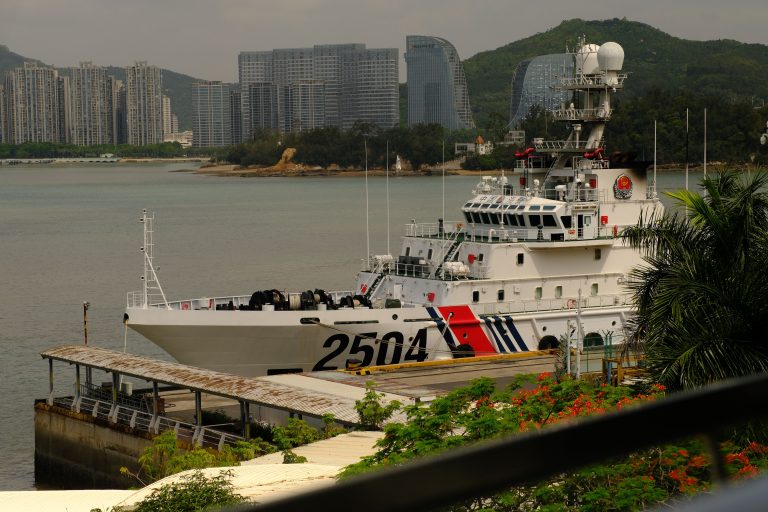
China has displayed a calm demeanor towards the occupation of reefs near the Spratly Islands by ASEAN claimant countries. This is seen in China’s use of the Coast Guard and additional maritime personnel in the waters under Chinese jurisdiction; however, the Chinese government has taken a more reserved, yet active, role in the improvement and expansion of infrastructure in the disputed part of the sea. China made an evaluation that an aggressive reaction to each of the Southeast Asian nations who are trying to build infrastructure on the reefs would jeopardise China’s larger aim to project itself as a benign regional player and contribute positively to regional development, by diminishing China’s diplomatic role.¹⁰
In addition, China’s established position (larger populations, large resources, logistical networks, and military reach) serve to lessen Beijing’s desire to react with great urgency to the incremental violations of sovereignty of Southeast Asian countries. Research conducted by experts on international relations shows that influential countries usually overlook low level challenges to sovereignty in cases when the cost of peacefully accommodating the actions would be less than the risk associated with escalation between parties involved in the dispute.¹¹ In this context, the micro-occupations of the Spratly Islands by Southeast Asian nations exploited the structural asymmetry of the situation; the level of violation posed too small a challenge to provoke a military response on the part of China, but was frequent enough to compel China to respond in some measure to those violations.
Why the Continued Low-Profile Dispute Is Important
The importance of these developments extends beyond the geographical area of the Spratly Islands. By determining how territorial competition develops in the 21st century, the actions of the Southeast Asian nations seeking to build infrastructure on the Spratly Islands may change the way that States throughout the world will assert indenture in the future. More and more frequently, States will assert control over territory through services, administration and environmental management as opposed to directly threatening to use force. In addition, the construction of these infrastructure projects may create “facts on the ground”; that is to say, the cumulative effect of all of the completed infrastructures on all of the reefs in the South China Sea will complicate the establishment of a lasting peace.
Finally, through developing a strategy based on civilianisation and endurance, the ASEAN countries are demonstrating the use of “soft” power vis-à-vis China and show that they are not just passive in relation to the ongoing competition among and between great power States. Because the Spratly Islands are not currently being militarily threatened by military forces, the Spratly Islands may provide a new opportunity to increasingly demonstrate how State power may be exerted in a manner other than just through direct military confrontation.¹²
Ultimately, how the status of the South China Sea evolves will be determined much more by the accumulation of mundane, minimally impact activities and behaviours of daily life on the common reefs than by the next military event between China and the other South East Asian claimant governments.
Bibliography
1. Brantly Womack, “The Spratlys: From Dangerous Ground to Apple of Discord,” Contemporary Southeast Asia 33, no. 3 (2011). https://www.jstor.org/stable/41446235
2. Clarence J. Bouchat, Dangerous Ground: The Spratly Islands and U.S. Interests and Approaches (Carlisle, PA: Strategic Studies Institute, 2013).
https://www.jstor.org/stable/resrep11811
3. Mira Rapp-Hooper, “Parting the South China Sea: How to Uphold the Rule of Law,” Foreign Affairs 95, no. 5 (2016).
https://www.jstor.org/stable/43946958
4. International Crisis Group, The Philippines’ Dilemma: How to Manage Tensions in the South China Sea, Dec. 2, 2021.
https://www.jstor.org/stable/resrep38457.5
5. International Crisis Group, Vietnam Tacks Between Cooperation and Struggle in the South China Sea, Dec. 7, 2021. https://www.jstor.org/stable/resrep38459.5
6. International Crisis Group, “Appendix B: Map of the Occupation in the Spratlys,” Dec. 7, 2021.
https://www.jstor.org/stable/resrep38459.12
7. Kale Bantigue Fajardo, “Reading Laleh Khalili’s Sinews of War and Trade,” Critical Ethnic Studies (Fall 2023). https://www.jstor.org/stable/48849574
8. International Crisis Group, Riding Unruly Waves: The Philippines’ Military Modernisation Effort, Aug. 12, 2025. https://www.jstor.org/stable/resrep71812.10
9. Euan Graham, “Southeast Asia in the U.S. Rebalance,” Contemporary Southeast Asia 35, no. 3 (2013). https://www.jstor.org/stable/43281262
10. Amitai Etzioni, “Is China a Responsible Stakeholder?” in Avoiding War with China (Cambridge: Polity, 2017). https://www.jstor.org/stable/j.ctt1nxqq1q.7
11. M. Taylor Fravel, “Power Shifts and Escalation,” International Security 32, no. 3 (2007/08). https://www.jstor.org/stable/30130518
12. Christian Wirth and Valentin Schatz, South China Sea ‘Lawfare’, GIGA, Aug. 1, 20 https://www.jstor.org/stable/resrep27058