By Kuma Yung
Oceans Rise, Empires Remain? When ASEAN Neutrality Meets a Flooded Chessboard
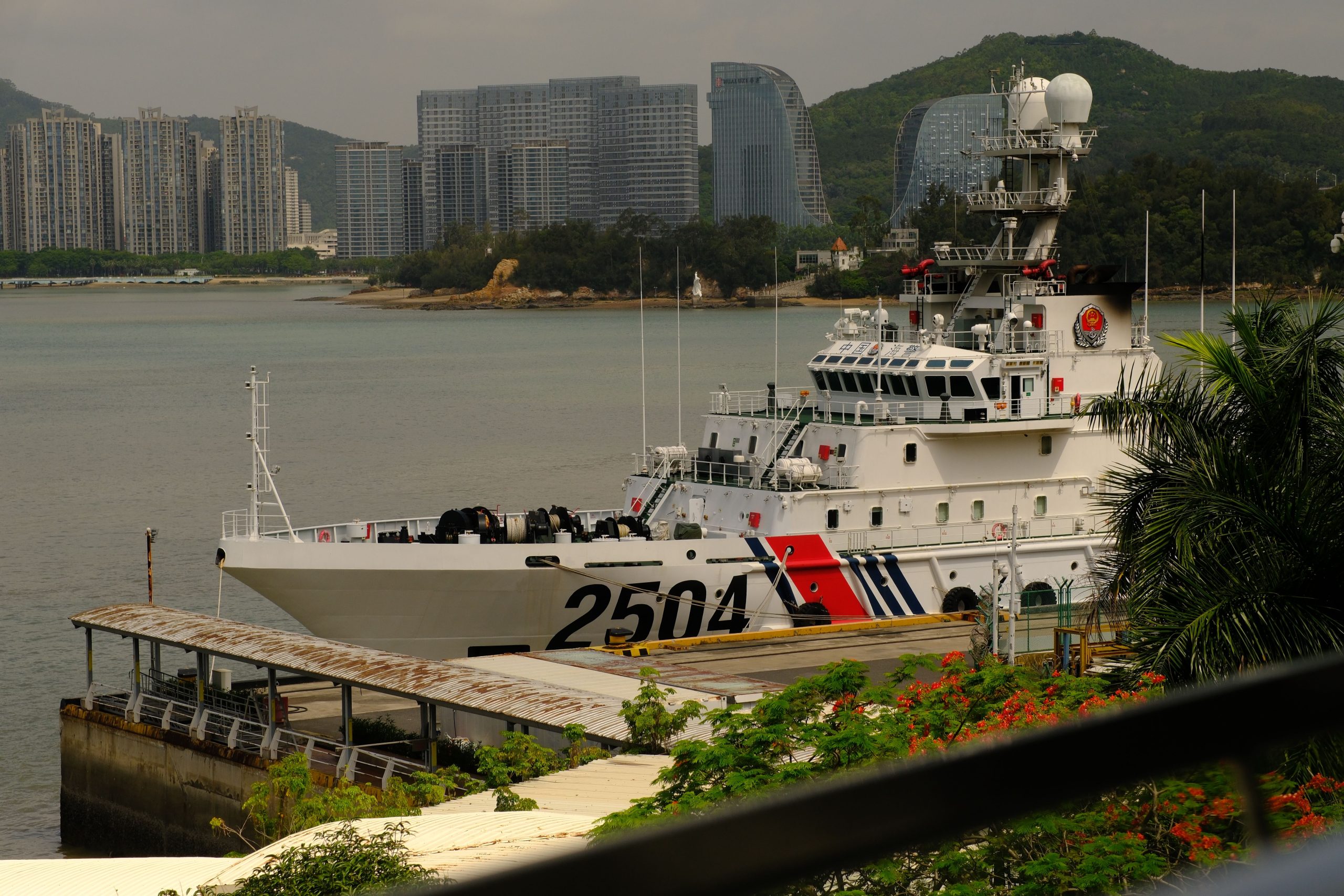
The South China Sea keeps returning to the headlines as a theatre of collisions, coercion, and competing flags. In March 2024, Chinese coastguard vessels used water cannon against Philippine boats near Second Thomas Shoal, damaging a civilian resupply vessel and injuring crew. In June, another confrontation left a Filipino sailor seriously injured. In August, Chinese and Philippine ships collided again near Sabina Shoal. These incidents push public attention towards the familiar language of geopolitics: deterrence, grey-zone pressure, maritime rights, and alliance credibility. They also narrow the region’s political imagination. The same sea that carries coastguards and nationalist claims is also warming, rising, and eroding the coasts, ports, and fisheries on which Southeast Asia depends.1
Gerard Toal offers a sharper way to read that narrowing of vision. In Oceans Rise, Empires Fall, he reworks geopolitics by returning it to the earthly conditions of politics itself: living space, planetary instability, and the material systems that sustain collective life. His warning cuts against the old strategic image of a fixed chessboard on which states manoeuvre for position. States may continue moving pieces across maps, reefs, and sea lanes while simultaneously degrading the conditions that make political order possible. The board itself is flooding. This insight matters in maritime Asia because the South China Sea is both a strategic arena and a vulnerable environment. A region that treats it mainly as a theatre of rivalry will struggle to place sea-level rise, marine degradation, and shared ecological exposure at the centre of its understanding of security.2
ASEAN neutrality deserves renewed attention because it has never been a frozen doctrine. Michael Leifer observed in the 1970s that ASEAN endorsed the idea of a Zone of Peace, Freedom and Neutrality without producing either a precise definition of “neutrality” or a practical programme for implementing it. Later, Ralf Emmers unpacked ASEAN neutrality more precisely as a continuing quest for autonomy and impartiality: the preservation of regional decision-making space from external domination, alongside the avoidance of institutionalised bias towards any major power. That ambiguity did not simply reveal weakness. It reflected the region’s diversity, the persistence of external competition, and the need for flexibility among states with different security interests. Neutrality in Southeast Asia therefore developed less as a hard rule than as a political habit: autonomy, restraint, and room for manoeuvre amid shifting power relations.3
That habit still performs valuable work. Southeast Asian governments do not want their region reduced to an exclusive frontier between Washington and Beijing. They continue to favour diplomatic space over formal bloc politics and broad engagement over hard alignment. Evelyn Goh’s account of Southeast Asian strategy remains useful here: key states have sought to enmesh major powers in regional institutions and preserve a broader equilibrium through diplomacy rather than collective defence. More recent work by Sarah Teo and Ralf Emmers makes a similar point. Indonesia and Vietnam, for example, still rely on ASEAN-centred arrangements to preserve strategic autonomy and avoid being forced to choose sides.4
In Geopolitics and Maritime Territorial Disputes in East Asia, Emmers argues that three forces shape escalation and de-escalation in maritime disputes and make it difficult ro stablise: territory, natural resources, and power distribution. He treats these variables as mutually reinforcing rather than separate causes. In the South China Sea, sovereignty remains the most combustible issue because national identity and territorial claims make compromise politically costly. Resource expectations can sometimes create room for cooperation, but they can also intensify rivalry. Power distribution adds another layer of anxiety, especially when one claimant acquires greater capacity to shape facts on the water. Emmers’ framework explains why the South China Sea repeatedly swings between diplomacy and confrontation.5
In recent events, sovereignty still drives the emotional and symbolic charge of each encounter at sea. Power distribution matters even more today than when Emmers wrote, because China’s coastguard and maritime militia now play a routine role in coercive maritime encounters. Resource politics has not disappeared either, whether through fisheries, energy expectations, or the broader strategic value of sea lanes. The South China Sea remains an escalation-prone field in which territorial claims, strategic asymmetry, and national prestige reinforce each other. Emmers’ later writing on the changing distribution of power in the South China Sea points in the same direction: as asymmetries sharpen, conflict management becomes harder even when outright war remains avoidable.6
ASEAN’s push for a South China Sea Code of Conduct deserves more credit than it usually receives. It will not settle sovereignty disputes, but it can still function as a “driver’s licence” for a crowded and dangerous sea: a way to reduce miscalculation, regularise behaviour, and keep incidents from sliding into wider crisis.7 That logic has a longer pedigree, and the South China Sea has been in need of a cooperative management regime. Searching for neutrality in the South China Sea, ASEAN has long tried to preserve autonomy and avoid polarisation even while dealing with China’s growing presence. In October 2024, ASEAN leaders again called for an early conclusion of the Code and emphasised confidence-building measures to prevent accidents and miscalculations. In January 2025, the Philippines urged ASEAN and China to tackle unresolved “milestone issues”, including the Code’s scope and legal status. In January 2026, as ASEAN chair, Manila insisted that any final text must be based on international law and UNCLOS.8
China’s rise has also expanded the contest beyond ships and shoals. Owen Au recently argued that Beijing now treats “maritime judiciary” as part of its drive to become a “strong sea power”, embedding judicial capacity within a broader maritime strategy. That development matters because it shows how the South China Sea is being shaped not only through coastguard pressure and diplomatic bargaining, but also through courts, domestic law, and institutional mechanisms designed to reinforce Chinese administrative presence in disputed waters. ASEAN may still seek a driver’s licence for a crowded sea, but it is doing so in a field where China is also trying to shape the rules of jurisdiction itself.9
These developments show ASEAN trying to convert neutrality into practical order-management under harder conditions. That record matters because ASEAN is often caricatured as passive, evasive, or procedurally addicted. The region’s institutions have certainly moved slowly, and Ralf Emmers and See Seng Tan were right to warn that excessive formalisation can blunt preventive diplomacy. Yet their argument also makes a subtler point: Southeast Asian security practice has not been empty. It has often worked through consultation, flexibility, and incremental conflict management, including in hard-security settings such as the South China Sea. The weakness lies less in total inaction than in the difficulty of turning procedural restraint into deeper political settlement.10
ASEAN has also begun to speak more clearly about climate risk, and this part of the story deserves equal attention. Work on non-traditional security in Southeast Asia has long shown that ASEAN does not simply ignore such issues. Caballero-Anthony and Gong argue that the regional challenge lies not only in securitising new threats, but in building workable forms of governance around them. Sembiring’s account of climate cooperation in Southeast Asia likewise shows that ASEAN has tried to build forms of regional coordination on climate adaptation, mitigation, and resilience, even if implementation remains uneven. This broader literature helps explain why ASEAN has already moved climate into the category of regional governance rather than leaving it wholly outside security debates.11
Recent ASEAN documents confirm that shift. The ADMM-Plus adopted a joint statement in November 2024 on resilience to climate-related and other natural disasters. ASEAN’s 2025 summit and ministerial statements likewise stressed adaptation, mitigation, and regional resilience, while the 2025 ASEAN Joint Statement on Climate Change to COP30 reaffirmed the urgency of collective action and warned about increasingly severe climate impacts in the region. These developments matter because they show that Southeast Asian institutions do not treat climate change as irrelevant to regional security.12
The deeper problem lies in how the region still orders its priorities. Toal pushes the discussion beyond whether climate change appears on the agenda. He asks how prevailing security priorities themselves organise exposure to harm. In the South China Sea, sovereignty disputes, maritime incidents, and major-power signalling continue to dominate the region’s imagination of order. Climate disruption enters the discussion, but usually as a secondary matter of technical cooperation rather than as a structuring fact of insecurity. That hierarchy has consequences. When policymakers imagine the sea mainly as a theatre of deterrence and legal contestation, they push ecological vulnerability to the margins even though degraded marine environments, coastal erosion, and rising seas shape the region’s future as surely as coastguard confrontations do.13
China’s rise intensifies this dilemma rather than replacing it. Beijing now sits at the centre of South China Sea geopolitics through its claims, coastguard presence, island-building legacy, and wider ability to shape the tempo of diplomacy. At the same time, sharper US-China rivalry raises the value of ASEAN neutrality because Southeast Asian governments still want to avoid turning the region into an exclusive bloc confrontation. This double pressure explains why ASEAN’s response looks both necessary and insufficient. The region needs restraint, dialogue, and procedural guardrails more than ever. Yet those same efforts absorb political energy that might otherwise go into treating climate vulnerability as central to regional order. Every new collision at sea drags attention back towards access, legality, and escalation control. The sea keeps rising in the background.14
ASEAN neutrality, therefore, faces a severe test rather than a final failure. Its value remains real: it preserves regional agency, resists exclusive alignment, and offers small and middle powers a language of restraint. Its limits have also become harder to ignore. The tradition was designed above all to manage rivalry among states and to reduce external interference. It was not designed for a world in which rivalry itself reshapes the material conditions of life. Toal’s planetary lens adds something crucial here. Southeast Asia does not only need rules to stop ships colliding. It also needs a regional order that treats shared ecological exposure as central to security.
The South China Sea now reveals the burden of governing a region where the chessboard itself is under warming water. ASEAN does not need to abandon neutrality in response. It needs to reinterpret neutrality for a warming maritime Asia. A credible neutrality for this century must preserve diplomatic space while also confronting the way geopolitics distributes climate risk. Otherwise, Southeast Asia may succeed in delaying alignment while failing to secure habitability. Oceans will rise, the chessboard will flood, and empires will remain.
Bibliography
1. Reuters, “China Coast Guard Uses Water Cannons against Philippine Ships in South China Sea,” March 23, 2024; Reuters, “Philippines Says to Resist China’s ‘Reckless Behaviour’ in South China Sea,” June 17, 2024; Reuters, “Philippines, China Trade Blame after Vessels Collide in South China Sea,” August 19, 2024.
2. Gerard Toal, Oceans Rise, Empires Fall: Why Geopolitics Hastens Climate Catastrophe (New York: Oxford University Press, 2024).
3. Michael Leifer, “Regional Order in South-East Asia: An Uncertain Prospect,” The Round Table 64, no. 255 (1974): 309–17; Ralf Emmers, “Unpacking ASEAN Neutrality: The Quest for Autonomy and Impartiality in Southeast Asia,” Contemporary Southeast Asia 40, no. 3 (2018): 349–70.
4. Evelyn Goh, “Great Powers and Hierarchical Order in Southeast Asia: Analyzing Regional Security Strategies,” International Security 32, no. 3 (Winter 2007/08): 113–57; Sarah Teo and Ralf Emmers, “Middle Powers and Networks: Indonesia and Vietnam in Southeast Asia’s Geopolitical Environment,” Australian Journal of International Affairs 79, no. 5 (2025): 633–51.
5. Ralf Emmers, Geopolitics and Maritime Territorial Disputes in East Asia (London: Routledge, 2010), 1–10. Emmers identifies territory, natural resources, and power competition as the key geopolitical forces shaping East and South China Sea disputes.
6. Ralf Emmers, “The Changing Distribution of Power in the South China Sea: Implications for Conflict Management and Avoidance,” Political Science 62, no. 2 (2010): 118–31.
7. Sam Bateman and Ralf Emmers, eds., Security and International Politics in the South China Sea: Towards a Cooperative Management Regime (London: Routledge, 2009); Ralf Emmers, “ASEAN’s Search for Neutrality in the South China Sea,” Asian Journal of Peacebuilding 2, no. 1 (2014): 61–77; Reuters, “ASEAN Urges Early Accord on South China Sea Code, End to Myanmar Violence,” October 13, 2024; Reuters, “ASEAN and China Must Start Tackling Thorny Issues of South China Sea Code, Philippines Says,” January 18, 2025; Reuters, “Philippines Will Insist South China Sea Code Is Based on International Law, Foreign Minister Says,” January 22, 2026.
8. Owen Au, “The PRC’s Drive for Judicial Power at Sea,” China Brief 25, no. 22 (November 21, 2025). https://jamestown.org/the-prcs-drive-for-judicial-power-at-sea/.
9. Ralf Emmers and See Seng Tan, “The ASEAN Regional Forum and Preventive Diplomacy: Built to Fail?” Asian Security 7, no. 1 (2011): 44–60.
10. Mely Caballero-Anthony and Lina Gong, “Beyond Securitization: Governing NTS Issues in Southeast Asia,” in Non-Traditional Security Issues in ASEAN: Agendas for Action, ed. Mely Caballero-Anthony and Lina Gong (Singapore: ISEAS–Yusof Ishak Institute, 2020), 1–27; Margareth Sembiring, “Climate Change and Regional Cooperation in Southeast Asia,” in Non-Traditional Security Issues in ASEAN: Agendas for Action, ed. Mely Caballero-Anthony and Lina Gong (Singapore: ISEAS–Yusof Ishak Institute, 2020), 28–66.
11. ASEAN Defence Ministers’ Meeting-Plus, “Joint Statement by the ASEAN Defence Ministers’ Meeting Plus on Resilience to Climate-Related and Other Natural Disasters,” November 21, 2024; ASEAN, “Chairman’s Statement of the 46th ASEAN Summit,” May 26, 2025; ASEAN, “Joint Communiqué of the 58th ASEAN Foreign Ministers’ Meeting,” July 9, 2025; ASEAN, “ASEAN Joint Statement on Climate Change to the 30th Session of the Conference of the Parties to the United Nations Framework Convention on Climate Change,” October 26, 2025.
12. Toal, Oceans Rise, Empires Fall
13. Reuters, “ASEAN and China Must Start Tackling Thorny Issues of South China Sea Code, Philippines Says,” January 18, 2025; Reuters, “Philippines Will Insist South China Sea Code Is Based on International Law, Foreign Minister Says,” January 22, 2026.