By Alix Pecheur
Feminist Development beyond the Western lens
The dominant discourse of the link between gender and development was first formulated in 1970 by Ester Boserup in her book “Woman’s role in economic development”. It focused on the fact that women had previously only been considered as passive beneficiaries of development policies through their roles as mothers and housewives instead of being active participants. Thus the model suggested focusing on the home as the standard unit for bringing women into the development programs. This completely ignored the fact that in many different cultures, women also worked in agriculture and food production.
More modern feminist development theories include approaches such as “Women in Development” (WID), “Women and Development” (WAD) and “Gender and development” (GAD). Both WID and WAD focus on improvements in the status of women. WID explains that women were excluded from development and takes a liberal economic approach, whereas WAD elaborates on the fact that women had always been a part of development but suffered from exploitative integration. GAD, on the other hand, is a constructivist approach which encompasses a comprehensive perspective. It was one of the first feminist development theories to include concepts of cultural origin as an index and a category of development1.
Eventually, a model for development programs for women’s practical and strategical needs was established. This was executed by the feminist academic Caroline Moser and was adopted by international institutions such as the United Nations and the World Bank and deployed globally , including in rural Africa. Moser’s model, which is still used in many development programs to this day, is technocratic and established as a supposedly universally applicable “toolbox” 2. This article aims to focus on the gaps that exist when feminist development theories are applied to rural Africa.
FEMINISM IS NOT A WESTERN CONCEPT
In many discourses surrounding feminism, particularly within development theories applied to rural Africa, there is often the idea that these approaches are a western cause which cannot be applied to these contexts. In “The Invention of Women: Making an African Sense of Western Gender Discourses”, the author Oyewumi interrogates gender as a Western construct that cannot be applied to African senses of feminism which she compares to be motherism. Using this definition, development programs have completely failed when attempting to apply gender development projects. This is because Oyewumi explains that being a mother, for the Yoruba society, means having the basis for the organization of women as solidarity groups 2.
A possible reason as to why the notion that feminism is a Western concept came to life can be linked to the instability that colonialism brought to pre-existing feminist movements. Pre-colonial movements of women empowerment are represented through the existence of female traditional rulers as well as the frequent contestation of women when it came to dissatisfaction within regimes. However, colonial establishments in Nigeria for example, completely eroded the position of African women in their own political spheres 2.
It is also important to recognize that in rural African spaces, families are more often than not pro-natalist. Children represent social and economic value in spaces where the mortality rate is higher, labor in terms of workers is needed and the value of a woman is based on her fertility 2. However, on the other side of the debate, it seems that the argument that feminism is a Western movement that is incompatible with Africa seems to solely attempt to discredit the movement as a whole. Although women as mothers are perceived to have more knowledge of the community as well as people’s needs, the idea that women who are not mothers do not have those abilities is quite exclusionary. This ignores other forms of feminist organization of social groups such as sisterhood 2. Furthermore, women are once again tied to their bodies and the functions of said bodies; creating a child. That is how their value is measured.
HEGEMONIC FEMINISM AT FAULT
In the 1990s post-colonial era of development, the way programs focused on gender equality and women’s rights was by categorising “Third World women” through homogenizing the concept of women in the Global South as one sole group of development beneficiaries. This is an ethnocentric trend that reduces women to a condition of gender identity and ignores other factors that also determine their identity such as class and ethnic origin. Thus, it creates a sense of “First World” women being the subjects of feminism where “Third World” women have the status as passive objects 4.
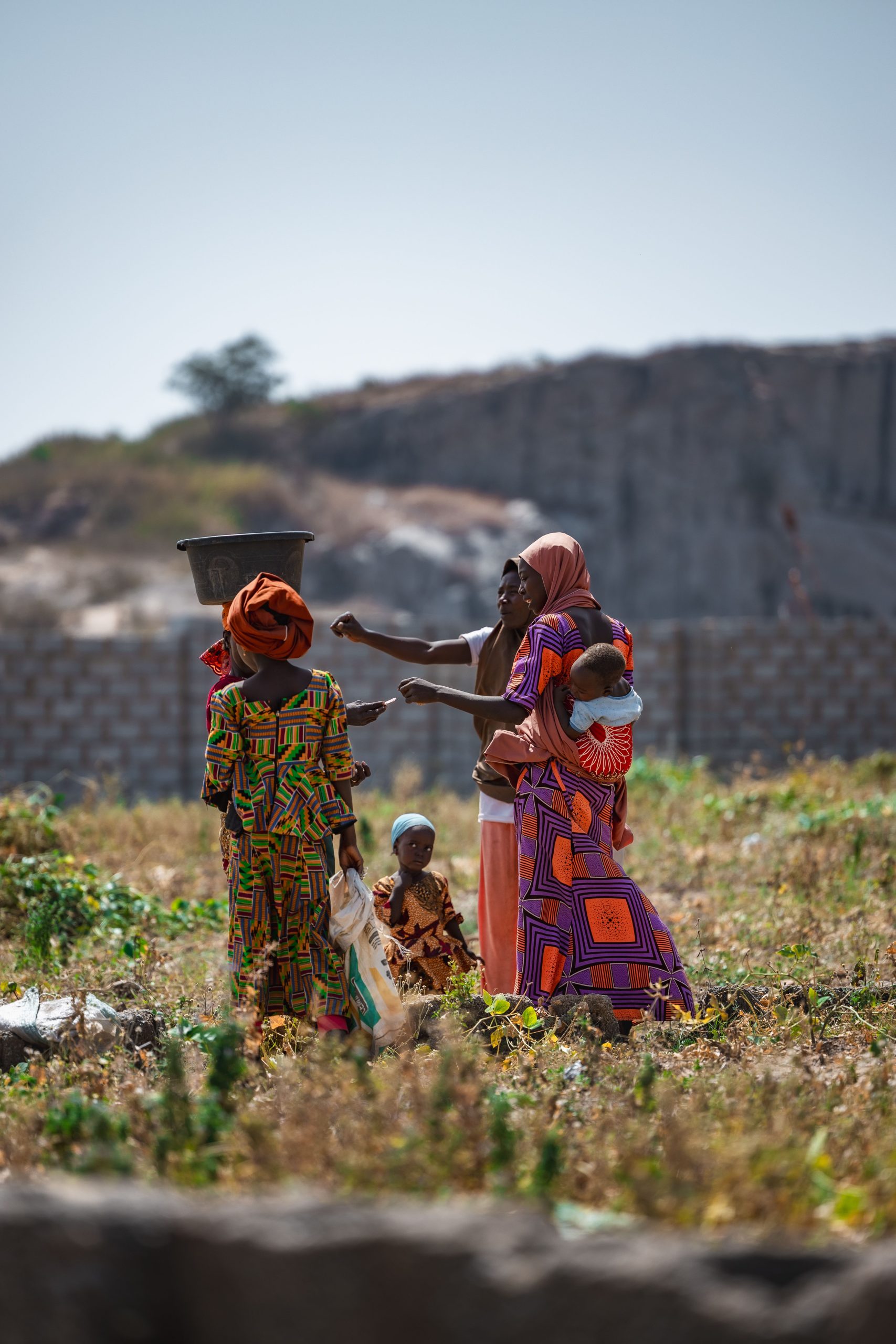
The initial Moser development program was centered around Western feminism ideas which recognized the home as a place where women fought to be recognized as active participants of development rather than passive actors. In these areas, the differences between men and women previous to feminist actions were concrete and clearly defined as women had to provide a stable environment for the man to come home to. Thus productive work was seen as solely taking place outside of that household. However, the differences between men and women’s roles in rural Africa is distorting. Domestic work is also considered a part of production, consumption and reproduction 2. Women’s roles include agricultural production and thus they are not confined to the house as a perimeter. Instead they are made to look after fields and children. An incredibly vast amount of African feminist literature exists however it has not been incorporated in any of the WID/WAD approaches. This creates an important gap in understanding and integration of development projects in different areas where there is no inclusion of ethnic knowledge.
Although development programs have now adopted the idea that feminism looks different in rural parts of Africa due to the different ways in which structures are built in a non-unitary manner, it is still incredibly hegemonic even on a regional level. Development structures cannot be made in one area and repeated in another. Rural areas are most often the target of many programs however these same areas are all home to a vast variety of traditions whether that be social organisation, agriculture practices or overall ways of living. How women fit in each and every one of those structures are incredibly different and can look completely opposite from one end of a country to another. Culture reflects upon feminist movements and is applied and understood differently. Lastly, gender power relations in local cultures must be intricately studied and understood in order to fully grasp women’s identities in these contexts. Only then can feminist development be introduced.
URBAN SUCCESSES AND RURAL FAILURES
In many urban areas such as Uganda and South Africa, there has been a growth in women’s representation in governments, which leads to growth in multiple development sectors. Both countries have a well represented national parliament as well as local assemblies. Particularly in Uganda, women have negotiated for representation through a system of special reserved seats for the purpose of parliamentary representatives of each district 1 . These urban successes show that African feminism is present and ever so growing across the continent.
Rural areas experience different struggles. Development projects and programs in rural areas are not structured in a way that would attract many women to participate. This is due to time constraints where women in rural areas do not have spare moments to participate and thus those that are present would be wealthier women or those who have more leisure time, often in urban areas. Women who are largely responsible for household production would often be less inclined to participate in collaborative income generating activities that would take them away from their land. Their first priority is family production and they have less time to devote to women projects especially if they have young children 3 .
Certain types of projects have worked to benefit women in these areas nonetheless. Integration of water supplies closer to villages has allowed for less distance to be travelled in order to obtain resources which maximises productivity and development in these specific areas. Furthermore hand mills were introduced in Cameroon due to development structures and have been proven to work3. These rural successes show that development initiatives, when thought out carefully with specific contexts and geographies, work towards benefiting populations and in particular women.
CONCLUDING REMARKS – THE ETHICAL DILEMMA
In every single development course and literature, the concluding remarks stay the same: locally led development projects are the solution. This statement stays true in this context. The discussion shouldn’t be centered around whether or not feminism can be applied to rural scenarios but instead how can the lives of women be facilitated in those rural areas in order to give them the option to reach out to development projects.
The wider aim of this article is, however, to look at the different questions of ethics when it comes to development and cultural contexts. Citizenship rights in African countries such as genital mutilation, witch-hunting women, child marriages and feminized altruism can conflict with women’s legal rights. Although these specific rights are recognised within the legal system, cultural beliefs and practices make the protection of these laws more difficult. It is a complicated debate which invites personal opinions and research and may never result in a clear conclusion.
Bibliography
[ 1 ] Afonja, Simi. “GENDER and FEMINISM in AFRICAN DEVELOPMENT DISCOURSE.” ResearchGate , Institute for Advanced Study Indiana University, Bloomington, Indiana, Nov. 2005,
https://www.researchgate.net/profile/Simi-Afonja/publication/268395215_GENDER_AND_FEMINISM_IN_AFRI
[ 2 ] Oyěwùmí, Oyèrónké. The Invention of Women: Making an African Sense of Western Gender Discourses. NED-New edition, University of Minnesota Press, 1997. JSTOR, http://www.jstor.org/stable/10.5749/j.ctttt0vh.
[ 3 ] Bryceson, Deborah Fahy, ed. Women Wielding the Hoe : Lessons from Rural Africa for Feminist Theory and Development Practice. London: Routledge, Taylor and Francis Group, 2020.
[ 4 ] Lang, Miriam & Aguinaga, Margarita & Mokrani, Dunia & Santillana, Alejandra. (2013). Development critiques and alternatives: a feminist perspective.
[ 5 ] Narayanaswamy, L. (2016) ‘Whose feminism counts? Gender(ed) knowledge and professionalisation in development’, Third World Quarterly, 37(12), pp. 2156–2175. doi: 10.1080/01436597.2016.1173511.