By Tridib Biswas
The Tragedy of Multilateralism in South Asia
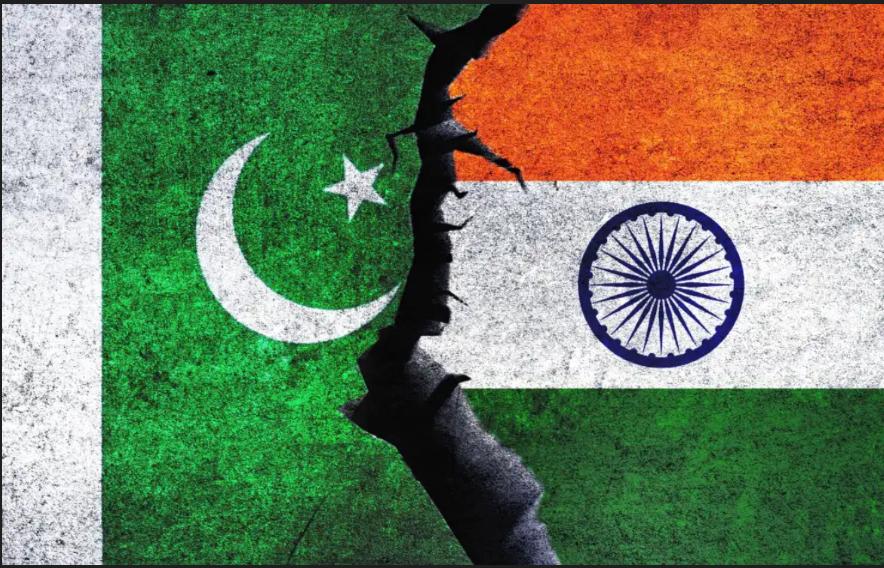
The South Asian Association for Regional Cooperation (SAARC) since its inception in 1985, has faced the challenge of regional cooperation. With the organization comprising of Afghanistan, Bangladesh, Bhutan, India, Maldives, Nepal, Pakistan and Sri-Lanka, the composition of this organisation itself may be the reason for its failure to deliver on its objective of regional stability. Despite promising agreements such as the South Asian Free Trade Area (SAFTA) in 2006, the SAARC has largely failed to deliver its overall agenda of promoting the welfare of South Asian people, and accelerating economic growth, social progress, and cultural development.[1] With the two nuclear powers, India, and Pakistan barely seeing eye to eye in light of the 2025 Pahalgam attack, [2] political instabilities in Afghanistan,[3] and Bangladesh, economic turmoil in Sri Lanka, and the lack of agency of smaller nations such as Bhutan, Maldives, and Nepal, there is very little that the SAARC can show as far as regional cooperation, and economic development is concerned. In this piece, there will be two reasons cited for SAARC’s inefficacies as a multilateral institution. These are, the hostile relations between bigger nation – such as India, and Pakistan – which paralyses the institution’s ability to function, and the lack of institutional mechanisms to operate in such a tense multilateral sphere. Upon examining the reasons stated, it will be sadly taken away that the fate of the SAARC is destined to fail with the current model inscribed in the Charter. Additionally, it will also be noted how smaller nations such as Nepal tend to suffer in such a political environment.
As a result, it will be seen how South Asia tends to have its multilateral facet suffer at the hands of its complicated bilateral relations.
With the composition of SAARC being inherently unequal in terms of geography, and military and economic strength,[4] the organisation has been extremely prone to hostile relations since its existence in 1985. A few examples include, the long standing issue of Kashmir between India and Pakistan, the unanimous rejection to recognise the Taliban government in Afghanistan, and the complicated dynamic between India, Pakistan, and Bangladesh due to the recent overthrow of the Sheikh Hasina government. A combination of such regional events has directly led to frequent cancellation of SAARC Summits. As described in Manzoor Ahmad’s article “SAARC Summits 1985-2016: The Cancellation Phenomenon”, the most significant reason leading to Summits being cancelled are the bilateral disputes between India, and Pakistan, Sri Lanka, and Bangladesh. [5]
A point which the former leads to is the inherent flaw in the SAARC as an organisation; it lacks the institutional strength to operate under hostile tensions. While the stringent bilateral relations may be a causal factor of this point, there is an immediate need for institutional reform. More specifically, it can be argued that the organisation gets paralysed due to its incompetency in addressing any bilateral disputes. [6] Appearing to have no consequence for breaching any values enshrined in the Charter, the organisation seems to fail due to its lack of consideration for the political atmosphere in South Asia. For example, two of the heavyweights in the organisation, India and Pakistan, can be seen to repeatedly violate the SAARC Charter. As noted in Article II of the SAARC Charter which focuses on Principles, it states that “Cooperation within the framework of the ASSOCIATION shall be based on respect for the principles of sovereign equality, territorial integrity, political independence, non-interference in the internal affairs of other States and mutual benefit.” [7] Prominent examples of violations of the Charter include Pakistan violating India’s territorial integrity during the Kargil War in 1999, [8] and India subsequently coercing Nepal to postponing the SAARC Summit – which was to take place in the same year – in light of Pakistan’s recent military coup. [9] The latter is especially significant as India in the past had no troubles in working with authoritarian leaders in the region. [10]
This power struggle between the two nations has unfortunately carried its legacy into contemporary South Asian politics. An example of this is Afghanistan, Bangladesh, and Bhutan opting out of the 2016 Summit in Islamabad due to India’s refusal to participate after the 2016 Uri attacks. [11] What this leads to is the institution being fragmented and hence being dispersed into various blocs. For instance, one way wherein this problem is displayed is when the most thriving economy in the region, India, prioritises initiatives such as the Bay of Bengal Initiative for Multi-Sectoral Technical and Economic Cooperation (BIMSTEC), which incidentally include all members of the SAARC, except Pakistan, Afghanistan, and the Maldives. Therefore, this leads to the three excluded countries depending on alternative programmes such as the Belt and Road Initiative (BRI) which exclude India, and Bhutan. As a result, what we see is a divided organisation with no true intention of multilateral cooperation.
A solution to pave the way for multilateralism is perhaps a normalisation of ties on a bilateral level. Professor John Gerard Ruggie – a leading scholar in International Relations – highlighted the hidden power of bilateral relations in crippling multilateral forums. [12] This is because he is argued that multilateralism inherently relies on general principles such as collective security, and indivisibility. However, as seen in the SAARC, this notion of multilateralism has its shortcomings, given the numerous disagreements. The bilateral power politics significantly overshadow any chance of multilateral norms effectively working.
However, this is not to say that bilateral relations can never be mended and are always detrimental in crippling multilateral forums. One significant example can be seen with Pakistan, and Bangladesh reconciling after Pakistani Prime Minister Shehbaz Sharif reportedly supported Bangladesh’s Chief Adviser, Dr. Muhammad Yunus’ proposal to revive the SAARC, and recognised the grievances of Bangladesh in the 1971 War. [13] While these two countries look hopeful for SAARC’s rejuvenation, it is imperative that such a body needs the active role of India. Perhaps an open dialogue between India and Pakistan regarding their own grievances, especially the ones stemming from the recent skirmish in April, and May of this year can lead to some form of multilateralism in South Asia.
An additional point which is often missed are the side-effects this has on nations with smaller agency such as Nepal, Maldives, and Bhutan. Each of these nations have a rich history of being tangled in their own diplomatic wars with other member states of the SAARC. [14] The bigger image to consider is once again that the organisation has been unable to address the domestic issues occurring in each of these countries. For example, Nepal has seen little help multilaterally in the aftermath of its Gen Z, and is only seen to get attention from India when it seeks to balance against China by cosying up to their former pro-China Prime Minister KP Sharma Oli. [15] This is not to say that India or Pakistan only uses smaller states which lack agency like Nepal as buffer states, or geo-political battlegrounds especially since both have helped Nepal in times of need in the past. [16] [17] However, the key point to note is that there is always an agenda that goes beyond multilateralism within South Asia which seems to be a recurring theme.
The contemporary examples of incompetent diplomacy, and hostile relations are plenty. New Delhi’s reluctance to extradite Bangladesh’s former Prime Minister Sheikh Hasina—even with an extradition treaty in place, [18] the suspension of the Indus Water Treaty, [19] Sri Lanka being sent expired food by Pakistan after the island was devasted by a cyclone, [20] and Islamabad having constant issues with Afghanistan regarding terrorism [21] are only a few of the problems which tarnish South Asia’s hopes for multilateralism. Solutions for such divisions can possibly be bridged by promoting the unrealised benefits of economic cooperation even during times of conflict. For instance, Argentina and the United Kingdom have had, and continue to fiercely disagree over the status of the Falklands/Malvinas Islands [22] but are still able to foster extensive economic cooperation. [23] This is not to make the claim that trade will automatically lead to peace and subsequently cooperation. It is rather to highlight how bilateral relations can continue to be healthy even with persisting conflict. Perhaps South Asia may present a unique case, where South Asia’s multilateralism has reached a challenging obstacle wherein certain grievances are so difficult to set aside, that the lack of resolving them takes precedent over any form of cooperation—both bilaterally, and multilaterally. With SAARC’s fate being in the hands of South Asian leaders, the deft avoidance of addressing any grievances may have killed the organisation. As things currently stand, what can be taken away is that the heated disputes, and failed institutional mechanisms to resolve complex regional dynamics have dented any hopes for SAARC to function, and has ultimately led to its dormancy for the everlasting future.
Bibliography
1. Majid, Dr Abdul. “SAARC prospects and challenges.” South Asian Studies 33, no. 1
(2020).
2. Diya Ashtakala. 2025. “What Led to the Recent Crisis between India and Pakistan?”
Csis.org. May 20, 2025.
https://www.csis.org/analysis/what-led-recent-crisis-between-india-and-pakistan.
3. Center for Preventive Action. 2025. “War in Afghanistan.” Global Conflict Tracker.
Council on Foreign Relations. February 12, 2025.
https://www.cfr.org/global-conflict-tracker/conflict/war-afghanistan.
4. See Majid, Dr Abdul. “SAARC prospects and challenges.” South Asian Studies 33,
no. 1 (2020).
5. Ahmad, Manzoor. “SAARC summits 1985-2016: The cancellation
phenomenon.” IPRI Journal 17, no. 1 (2017): 43-71.
6. South Asian Association for Regional Cooperation. 2020. “SAARC Charter.”
Saarc-Sec.org. July 12, 2020.
https://www.saarc-sec.org/index.php/about-saarc/saarc-charter.
7. South Asian Association for Regional Cooperation. 2020. “SAARC Charter.”
Saarc-Sec.org. July 12, 2020.
https://www.saarc-sec.org/index.php/about-saarc/saarc-charter.
8. Ahmad, Manzoor. “SAARC summits 1985-2016: The cancellation
phenomenon.” IPRI Journal 17, no. 1 (2017): 43-71.
9. Majid, Dr Abdul. “SAARC prospects and challenges.” South Asian Studies 33, no. 1
(2020).
10. Majid, Dr Abdul. “SAARC prospects and challenges.” South Asian Studies 33, no. 1
(2020).
11. Reddy, Ramana, and Ramana Reddy. 2025. “INDIA’S ROLE in SAARC.” JETIR 7
(11): 106–12106–12. https://www.jetir.org/view?paper=JETIR2011017.
12. Ruggie, John Gerard. 1992. “Multilateralism: The Anatomy of an
Institution.” International Organization 46 (3): 561–98.
https://scholar.harvard.edu/files/john-ruggie/files/multilateralism.pdf.
13. The Diplomat. 2024. “Are Bangladesh and Pakistan Relations Moving toward
Rapprochement?” Thediplomat.com. The Diplomat. December 24, 2024.
https://thediplomat.com/2024/12/are-bangladesh-and-pakistan-relations-moving-towa
rd-rapprochement/.
14. Ahmad, Manzoor. “SAARC summits 1985-2016: The cancellation
phenomenon.” IPRI Journal 17, no. 1 (2017): 43-71.
15. The Diplomat. 2025. “India Extends Support to Interim Government’s Efforts to
Stabilize Nepal.” Thediplomat.com. The Diplomat. September 22, 2025.
https://thediplomat.com/2025/09/india-extends-support-to-interim-governments-effort
s-to-stabilize-nepal/.
16. The Diplomat. 2025. “India Extends Support to Interim Government’s Efforts to
Stabilize Nepal.” Thediplomat.com. The Diplomat. September 22, 2025.
https://thediplomat.com/2025/09/india-extends-support-to-interim-governments-effort
s-to-stabilize-nepal/.
17. The Express Tribune. 2015. “Pakistan Pledges 1m Aid for Reconstruction Work in
Quake Hit Nepal.” The Express Tribune. June 25, 2015.
https://tribune.com.pk/story/909779/pakistan-pledges-1m-aid-for-reconstruction-work
-in-quake-hit-nepal.
18. Nazam Laila. 2025. “Sheikh Hasina Verdict and Bangladesh’s Upcoming Referendum
Signal a Transitional Moment for South Asia.” Chatham House – International Affairs
Think Tank. June 13, 2025.
https://www.chathamhouse.org/2025/11/sheikh-hasina-verdict-and-bangladeshs-upco
ming-referendum-signal-transitional-moment-south.
19. The Economic Times. 2025a. “Indus Waters Treaty to Remain Suspended until
Pakistan Aborts Support for Terrorism: MEA.” The Economic Times. Economic
Times. May 13, 2025.
https://economictimes.indiatimes.com/news/india/indus-waters-treaty-remains-suspen
ded-until-pakistan-aborts-support-for-terrorism-mea/articleshow/121140279.cms?fro
m=mdr.
20. The Economic Times. 2025b. “‘Bankrupt’ Pakistan Sends Expired Aid to Cyclone-Hit
Sri Lanka, Faces Massive Backlash after Netizens Poin.” The Economic Times.
Economic Times. December 2, 2025.
https://economictimes.indiatimes.com/news/new-updates/bankrupt-pakistan-sends-expired-aid-to-cyclone-hit-sri-lanka-faces-massive-backlash-after-netizens-point-at-phot
os/articleshow/125714991.cms?from=mdr.
21. Ministry of Foreign Affairs, Government of Pakistan. 2025. “Statement by the
Spokesperson.” Mofa.gov.pk. November 9, 2025.
https://mofa.gov.pk/press-releases/statement-by-the-spokesperson-8.
22. Crawford, Stuart. 2025. “Milei Turns to Falklands as Argentina’s Troubles Mount.”
UK Defence Journal. October 6, 2025.
https://ukdefencejournal.org.uk/milei-turns-to-falklands-as-argentinas-troubles-mount
/.
23. Department for Business and Trade, and Chris Bryant. 2025. “UK Sets Sights on
Closer Ties with Argentina and Brazil.” GOV.UK. September 18, 2025.
https://www.gov.uk/government/news/uk-sets-sights-on-closer-ties-with-argentina-an
d-brazil.