By Ambi Najjhur
The Caspian Chessboard
Positioned in the heart of post-Soviet Eurasia and an increasingly prominent role in Asian energy security, the Caspian Sea, the largest enclosed body of water in the world, is undergoing a fundamental shift from a Western-dominated future to one characterized by China-centered investment, Turkey-centered transit, Iranian logistical influence, and Indian aspirations for continental access. Beneath the slow and often precise world of pipeline construction lies a deeper truth; that Caspian energy is among the unremarked substructures of Asian geopolitics.
From Post-Soviet Competition to Asiatic Demand
After the dissolution of the Soviet Union, newly sovereign countries, Azerbaijan, Kazakhstan, and Turkmenistan, began the process of monetizing their massive hydrocarbon reserves, which had been largely monopolized through Moscow. In the 1990s, western companies, in particular, BP, Chevron and ExxonMobil, entered the region through production sharing contracts. As Kubicek states, the early “oil rush”was more than commercial, it was geopolitical; a way for Washington and European capitals to decrease Russia’s monopoly over regional transit.1
A significant shift occurred in the twenty-first century when global demand was replaced by a growing subcontinental preference. The double-digit growth of China’s energy consumption in the 2000s led to a diversification of supply away from maritime zones affected by the U.S. Navy. The Central Asia-China gas pipeline opened in 2009, which stretches across Turkmenistan, Uzbekistan, and Kazakhstan, allows China a direct overland energy corridor, currently totaling tens of billions of cubic meters annually.2 As Petersen and Barysch indicate, these pipelines are also geopolitical; they provide both a source of major resources, and they hard-wire Central Asian states into China’s economy and agricultural production, while likewise diminishing Russian leverage over the states.3
India’s involvement progressed at a slower pace, but is becoming more intentional. The New Delhi strategy primarily focuses on a land-based route to Central Africa through Iran’s Chabahar Port, bypassing Pakistan. Despite USA sanctions limiting the availability of funding, the Indian planners are sure that access to Caspian energy resources will provide essential leverage against the Chinese and maritime vulnerabilities. 4 While India currently purchases little Caspian gas, internally, consumption amounts would represent a major step towards long-term consumption access, either through pipeline or liquefied natural gas from Iranian terminals.
Pipelines: The Architecture of Power
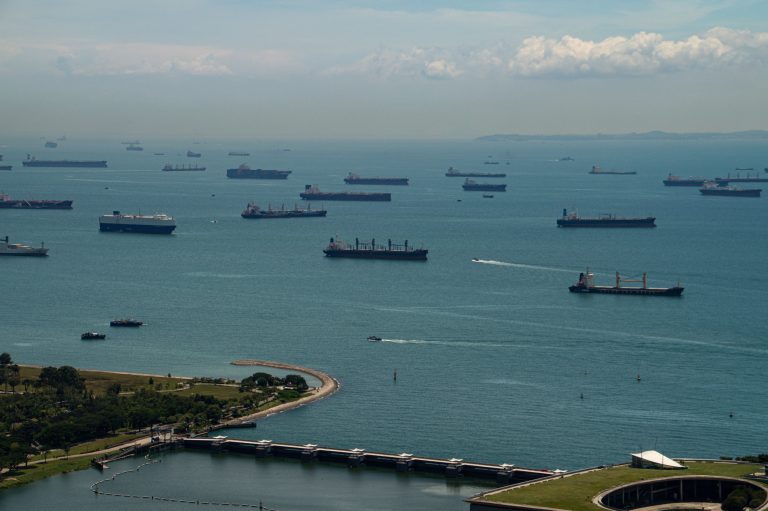
In the context of maritime geopolitics, the governance of sea lanes is inherently a measure of power. The same holds true too for pipelines in the Caspian, which play that role. Baku–Tbilisi–Ceyhan (BTC) pipeline opened in 2006 as the first large-scale export route in the region to bypass Russia and Iran entirely. When opened,this strategic re-routing of Caspian crude to Western markets, undermined the monopolization of Russians pipeline and the aspirations of Iran to utilize its connections.
BTC prompted the South Caucasus Pipeline, and then later, the much larger Trans-Anatolian Pipeline (TANAP), which established Azerbaijan as a main supplier for Turkey, and a contributor to a European diversification of supplies. For the European Union, particularly following Russia’s annexation of Crimea in 2014, and invasion of Ukraine in 2022, gas that was sourced from the Caspian Sea became a political asset, not just an energy source. The result is a network that Azerbaijan’s gas flows west, through Georgia and Turkey, replenishing both its reliance on Ukrainian transit, and Russian leverage.
Moscow’s response to this gradually tighter hold over Central Asian routes, specifically for Turkmen and Kazakh gas. Historically, Gazprom set purchase prices among upstream gas producers and maintained control over the volumes exported which afforded Russia the ability to economically punish or reward bordering governments 5. But as Babali explains, following Europe’s phaseout of Russian imports of gas in 2022, Moscow had to redirect those volumes to Asia, which burst their bargaining power into overdrive, while weakening Russia’s ability to use those volumes to directly coerce Central Asian gas producers.6
Iran’s Geography and Swap Diplomacy
While Iran does not have the necessary financial resources to exert dominance over Caspian development, it does have a distinctly geopolitical reliance: geography. Northern Iran has no major oil terminals, which allows Tehran to utilize “swap deals” whereby an equivalent volume of oil imported from Turkmen, Kazakh, or Azerbaijani oil enters the north and an equivalent amount is exported from ports in the Persian Gulf. As Pirani notes these swaps may not make a meaningful economic impact but are strategically important because they allow landlocked producers an outlet to markets and give Iran leverage in regional diplomacy.7
The most contentious battlefield is in Turkmenistan’s gas. Turkmenistan has the fourth largest reserves of natural gas in the world and has only ever dealt with two significant export customers. China is the dominant purchaser and Russia is their political spoiler. The proposed Trans-Caspian Gas Pipeline (TCGP) that seeks to link Turkmenistan to Azerbaijan and into Europe should break this dependency. However, Russia and Iran continue to vigorously oppose the TCGP and subsequently invoke questions of the environment and legality, but in practice seek to defend their interests as transit countries.8
The 2018 Convention: Law, Sovereignty, and Power 9
For decades, the Caspian states debated the question of whether the sea was legally a lake (requiring joint development) or a sea (allowing division into national zones). In 2018, the Caspian states signed a Convention on the Legal Status of the Caspian Sea, establishing a hybrid system which allowed the water surface to be shared for free navigation, while providing for a division of the sea floor into territorial sectors. Al-Jazeera cites that the new terms also specified that cross-sea pipelines needed only to receive approval from coastal states that were directly affected by those pipelines, which extinguished automatic opposition by Russia and Iran.
In theory, this allows TCGP to proceed. In practice, however, politics supersedes legal neutrality, that is Moscow and Tehran continue to voice opposition through environmental assessments, threatening diplomatic retaliation, lobbying efforts in Baku and Ashgabat. Thus, while the Convention changed the legal terms in which TCGP might be developed, it did not ultimately change the realities of power.
Turkey’s Bid for Energy Centrality
Turkey currently presents itself as the ultimately necessary corridor between suppliers in Asia and consumers in Europe. A series of pipelines (i.e., BTC and TANAP), and interconnectors into Greece and Italy, create an energy bridge running through Anatolia. While Ankara’s “energy hub” is not mere rhetoric, it is nonetheless true that the more annual gas flows through Turkish territory from the Caspian, the more Ankara’s influence in negotiations with Brussels, Moscow, and even Washington. Hürriyet Daily News posits that energy supports Turkey’s wider strategic autonomy strategy to transform Turkey’s dependence on NATO membership, by utilization of geography.10
The ambition faces several constraining hurdles:
- Turkmen gas cannot make its way on a longer, annual basis without the Trans-Caspian pipeline.
- There is continued objection from Iran and Russia against further diversification away from the east.
- Additionally, based on renewable sources and electrification, Europe’s long-term demand for gas is unclear.
Nevertheless, in near and medium future, Turkey will remain the only land corridor available for transfers of Caspian gas into Western markets.
Environmental and Domestic Constraints
As competition heightens, the ecological crisis in the Caspian Sea is worsened. Changes in water levels, industrial pollutants, and evaporative change due to climate change are affecting coastal development and depleting fisheries. As reported in Nature Middle East, sturgeon, which were previously a significant source of regional economic activity, have been lost due to pollution, illegal fishing, and the destruction of spawning habitat. Climate models are predicting that shoreline erosion will worsen, which will place ports and pipeline terminals along the shoreline at risk in the future.11
The domestic political context intensifies these regional dynamics:
- Azerbaijan is investing hydrocarbon revenues in for infusions of military upgrades while asserting influence within the South Caucasus.
- Turkmenistan’s regime is reliant upon gas revenues to survive and remain a victim of shocks to prices due to limited diversification.
- Kazakhstan is struggling with dependence from Chinese investment against a security relationship with Russia as it relates to placing Russian troops in the country in response to unrest in 2022.
- Iran views the Caspian Sea not only as a source of energy but leverage in the face of sanctions and economic isolation.
Caspian Energy in the Asian Century
Traditional Western dialogues were often framed within a simplistic binary about the Caspian Sea, an arena of opportunity for the United States and Russia. That framework is no longer relevant, however. If anything, we are witnessing something decidedly more Asian.
- China is the largest buyer, and investor.
- Turkey is the largest transit corridor.
- Iran is the logistical gatekeeper, swapping and porting.
- India is working to build a continental link into Central Asia.
The Caspian Sea is asserting its own role in the continental connectivity of Eurasia and is no longer an additive to European energy security. Pipelines and railways are building a continental architecture of power through the Caspian, and it is not just pricing and the control of routes for movement that matter; what matters is allegiance.
When we envision the flux of the strategic board of options in Asia, the major players may not be those who hold the largest reserves of energy. The actors of interest may be the vested actors that control how energy moves, or does not move, across time and space. There is most likely not going to be a throwing down of the gauntlet for a rematch of Cold War ideology’s battleground in the board room in this space. Rather the situings will be thick embodiments of transactions of millions and millions of tons of energy, transit rates, swap treaties, pipelined diplomacy, and economic strategic obligations. Those positioned for agency over the engines listed above, will most likely have the most traction in swaying the balance of power in the region Asia.
Bibliography
1. https://www.sciencedirect.com/science/article/pii/S1879366513000171
2. https://www.brookings.edu/wp-content/uploads/2016/06/cr08.pdf
3. https://www.cer.eu/sites/default/files/publications/attachments/pdf/2011/rp_010-4118.pdf
4. https://sprf.in/wp-content/uploads/2024/12/SPRF-2022_IB_India-Central-Asia-Energy-Relations.pdf
5. https://www.oxfordenergy.org/wpcms/wp-content/uploads/2019/12/Central-Asian-Gas-NG-155.pdf
6. https://www.ogel.org/article.asp?key=771
7. Ibid
8. https://www.intellinews.com/pannier-russia-is-pushing-turkmenistan-out-of-the-natural-gas-market-326833/
9. http://www.en.kremlin.ru/supplement/5328
10. https://www.institude.org/report/geopolitical-constraints-of-turkeys-energy-hub-ambitions
11. https://www.nature.com/articles/s43247-025-02212-5